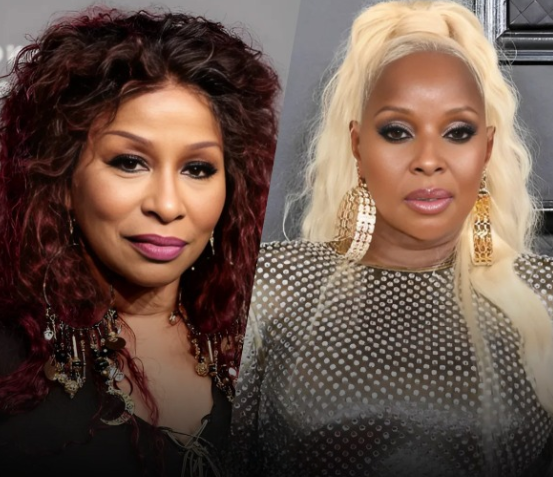
The release of Rolling Stone magazine’s list of the 200 Greatest Singers of All Time last year sparked widespread discussion, celebration, and controversy across the music world. Rankings like these often invite strong reactions, especially from artists whose careers have shaped generations. One of the most talked-about responses came from legendary singer Chaka Khan after she learned that Mary J. Blige had been ranked higher than her on the list.
Chaka Khan, whose decades-long career has influenced soul, funk, R&B, and pop music, did not hide her disappointment. She openly questioned the judgment behind the rankings, expressing disbelief that her contributions were placed below Mary J. Blige’s. Rather than focusing solely on the list itself, Chaka used the moment to reflect on her legacy and the standards she believes define vocal excellence. Her reaction quickly gained attention, igniting debate among fans about how artistic impact should be measured.
During an interview, Chaka Khan revisited a moment from the early 1990s involving Mary J. Blige’s rendition of Chaka’s classic song “Sweet Thing.” The cover, released in 1992, became a significant hit for Mary J. Blige and introduced the song to a new generation of listeners. While many fans embraced the reinterpretation, Chaka recalled having a very different reaction at the time.
According to Chaka, she personally contacted Mary after hearing the song to offer direct feedback. She shared that she felt the performance did not meet her expectations and believed the vocals lacked the strength and precision she associated with the original version. Chaka framed the interaction as an honest critique rather than an attack, emphasizing her commitment to vocal discipline and preparation.
During their conversation, Chaka asked Mary about the recording process, including the time and setting in which the vocals were recorded. Mary reportedly explained that the song was recorded early in the morning, around 8 a.m. Hearing this, Chaka offered what she described as advice rooted in experience. She suggested that early mornings may not be ideal for vocal performance, especially for singers who rely on emotional depth and vocal power.
For Chaka Khan, the exchange reflected a broader philosophy about artistry and preparation. She has long spoken about the importance of respecting the craft, understanding one’s voice, and creating conditions that allow for the best possible performance. In her view, technical readiness and timing play a major role in delivering a strong vocal recording.
The resurfacing of this story added fuel to the ongoing debate surrounding the Rolling Stone list. Supporters of Mary J. Blige point to her cultural influence, emotional storytelling, and lasting impact on R&B and hip-hop soul. Meanwhile, fans of Chaka Khan emphasize her vocal range, technical mastery, and pioneering role in shaping modern soul and funk music.
Ultimately, the situation highlights the subjective nature of ranking art. Music resonates differently with each generation, and comparisons between legends often reflect personal taste as much as measurable achievement. While the debate continues, both Chaka Khan and Mary J. Blige remain towering figures in music history, each having left an undeniable mark on the industry.
Rather than diminishing either artist, the conversation serves as a reminder of the passion, pride, and deep connection artists have to their work—especially when their legacies are placed side by side.