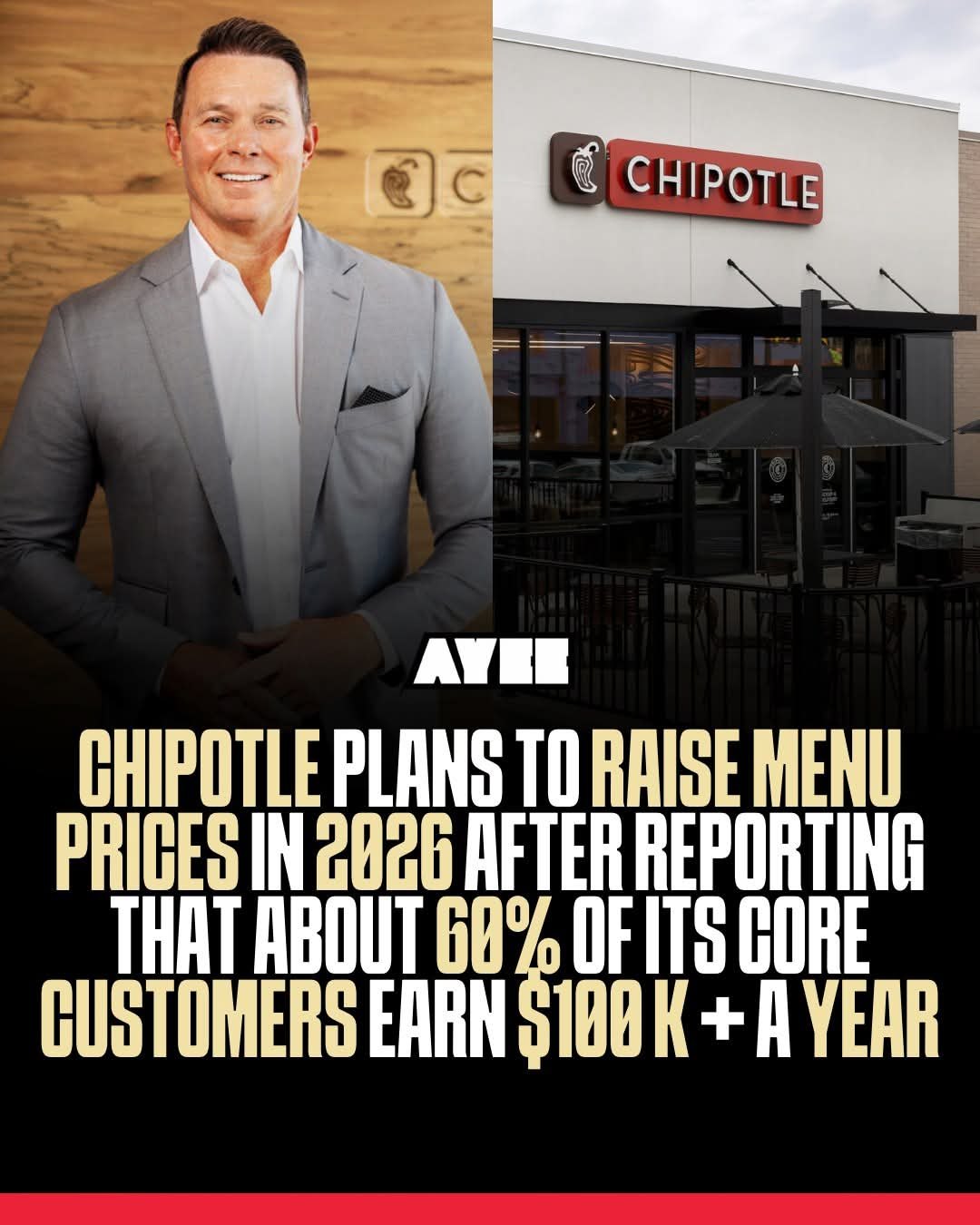

Chipotle Mexican Grill — the fast-casual titan once synonymous with affordable burritos and fast service — has ignited a firestorm of conversation with a bold new strategy: lean into wealthier diners and raise prices accordingly.
On a recent earnings call, Chipotle’s CEO Scott Boatwright revealed results from a deep dive into the company’s customer base, concluding that about 60% of its core customers have household incomes above $100,000. That insight, he opined, gives the brand confidence to raise menu prices by roughly 1–2% this year — a modest bump compared with industry inflation but a clear signal of changing priorities.
“We learned that 60% of our core users are over $100,000 a year in average household income … that gives us confidence that we can lean into that group in a more meaningful way.” — Scott Boatwright, Chipotle CEO (earnings call)
 Why the Shift?
The fast-casual restaurant landscape has been navigating a “K-shaped economy,” where higher-income consumers maintain spending while lower-income diners tighten their belts. Chipotle’s own comparable store sales declined recently despite beating overall revenue expectations — a sign that more price-sensitive traffic isn’t returning as hoped.
By focusing on customers who are still willing to spend on dining out, Chipotle hopes to stabilize traffic and grow revenue even as others in the industry struggle with flat or falling visits.
 Sweet Spot or Sourd Dough?
Industry analysts say this tactic isn’t unique — many restaurant chains have identified their most loyal, high-spending segments and tailored pricing and offerings accordingly. The belief is simple: if your most frequent guests can afford a bit more, why not give them what they want? But the optics of explicitly tying pricing strategy to income brackets has stirred debate.
Chipotle hasn’t stopped innovating, either: new offerings like high-protein menu items cater to trends among health-focused, digital-native diners. These items often sell as add-ons or premium options — further boosting average ticket size.
 Reactions From the Burrito Belt
Public reaction has been swift and varied:
-
Supporters say this is smart business in a tough economy — one that ensures Chipotle’s long-term success.
-
Critics argue it’s tone-deaf, suggesting that the chain is abandoning value-seeking customers — the same people who helped it become a household name.
-
Across social media and Reddit threads, many longtime fans lament rising prices and shrinking portions, questioning whether Chipotle still offers real value.
 A Calculated Gamble
Is Chipotle pricing out its fanbase? Not exactly — the company insists it remains committed to broad appeal and still offers options at accessible price points. But it’s also betting that the core of its business lies with those who:
-
Use its app and digital ordering frequently
-
Prioritize nutrition and quality ingredients
-
Are less sensitive to small price changes
Ultimately, the company is placing a strategic bet: the burrito bowl isn’t just lunch — it’s a lifestyle choice worth paying a little extra for.
 Final Take
Chipotle’s new pricing narrative tells a broader story about consumer behavior in 2026 — one where discretionary spending is increasingly segmented, and brands are tailoring their strategies accordingly. Whether this move will pay off in loyalty and long-term growth is still unfolding, but one thing’s clear: Chipotle is now openly catering to the $100K crowd.